
How Hybrid Renewable Systems are Reducing Diesel Dependence and Strengthening Remote Power Infrastructure
INDUSTRY BRIEF

This Industry Brief Examines
How hybrid renewable microgrids can reduce operational dependence on diesel while preserving backup generation for reliability
The role distributed wind can play alongside solar, batteries, and controls in strengthening remote and coastal energy systems
Why diesel-dependent island and coastal power systems face growing pressure from fuel costs, logistics risk, generator runtime, and severe weather exposure
How Skystream 3.7 deployments in the Maldives, Alaska, Puerto Rico, Jamaica, and other environments illustrate real-world distributed wind applications
Key design considerations for operators evaluating hybrid systems, including renewable resource diversity, generator runtime optimization, AC-coupled architecture, serviceability, and scalability
Distributed Wind and Energy Resilience in Remote and Island Environments
Remote and island communities around the world continue to face a common energy challenge: how to provide reliable, affordable electricity in locations where traditional grid infrastructure is limited or unavailable.
For decades, diesel generators have served as the default solution for remote power generation because they are dispatchable, transportable, and familiar to operators, but diesel-only systems also create persistent operational and economic challenges. Fuel transportation costs, generator maintenance, emissions, and supply chain vulnerability can place significant financial pressure on isolated communities and infrastructure operators.
As fuel prices fluctuate and resilience concerns grow, hybrid renewable microgrids are increasingly being deployed as a practical way to reduce diesel dependence while improving long-term operational stability.
By integrating renewable generation sources such as wind and solar with battery storage and conventional backup generation, hybrid microgrids can reduce generator runtime, improve fuel efficiency, and maintain reliable power without requiring a complete replacement of existing infrastructure.
One notable example comes from the Maldives, where 67 Skystream 3.7 wind turbines were deployed across three island communities as part of a hybrid wind, solar, battery, and diesel microgrid system designed to reduce diesel use for residential power generation by up to 80%.

The Operational Challenge Facing Remote Power Systems
Remote energy systems operate under a unique set of constraints that differ significantly from traditional utility-scale power infrastructure.
In many island communities, rural villages, telecommunications sites, and isolated industrial operations, extending centralized grid infrastructure is either economically impractical or geographically impossible. As a result, localized generation systems must provide continuous power independently.
Historically, diesel generators became the dominant solution because they could be transported to remote sites relatively easily and scaled according to demand. However, diesel-based systems introduce a range of operational challenges that become more pronounced over time.
These include:
Rising fuel transportation and storage costs
Maintenance burden from continuous generator runtime
Reduced efficiency during variable loading conditions
Exposure to fuel supply disruptions
Environmental and emissions concerns
Noise and air quality impacts in populated areas
These pressures are particularly acute in island and coastal environments where fuel delivery may depend on weather conditions, shipping schedules, or long-distance transportation logistics.
According to the International Energy Agency (IEA) analysis on island energy systems, electricity generation on small and remote islands can cost up to 10 times more than on mainland territories, driven largely by imported fuel dependence and transportation logistics.
In many cases, remote communities are effectively paying a premium for energy insecurity.
At the same time, power demand in these regions continues to grow. Increased communications infrastructure, water treatment requirements, healthcare services, tourism development, and digital connectivity are placing additional strain on aging diesel-based systems.

Why Diesel Dependency Is Becoming Increasingly Unsustainable
While diesel generators remain common in remote power applications, the operational realities surrounding diesel-dependent systems are becoming increasingly difficult to ignore.
One of the most significant issues with diesel-only systems is runtime.
Generators operating continuously or cycling frequently experience the following:
Increased wear and maintenance
Higher fuel consumption
Reduced operational lifespan
Greater likelihood of service interruptions
In many remote applications, generators also operate inefficiently because loads fluctuate throughout the day. Diesel generators are often oversized to accommodate peak demand or future growth, causing them to run below optimal efficiency for long periods.
This inefficiency compounds fuel costs while increasing maintenance frequency.
The operational burden extends beyond economics. Remote fuel logistics create additional risk exposure during severe weather events or transportation disruptions.
Diesel generators are often oversized to accommodate peak demand or future growth, causing them to run below optimal efficiency for long periods.
In some Pacific island countries, the International Energy Agency (IEA) reports that fuel imports have accounted for up to 13% of GDP, illustrating how deeply imported energy costs can impact island economies and infrastructure planning.
And according to the NOAA Billion-Dollar Weather and Climate Disasters database, the United States has experienced hundreds of weather and climate disasters exceeding $1 billion in damages since 1980, underscoring the growing operational risks associated with extreme weather events and infrastructure vulnerability.
Hurricanes, coastal storms, flooding, and extreme heat can disrupt fuel transportation while increasing demand for reliable local power generation.
In some island environments, recovery timelines can still become prolonged after major storms. Following Hurricane Beryl in 2024, Jamaica experienced widespread power disruptions across critical infrastructure networks, with early restoration estimates suggesting heavily impacted areas could remain without electricity for weeks. The storm reinforced how vulnerable centralized energy infrastructure and fuel-dependent systems can remain in coastal regions exposed to severe weather events.
These concerns are particularly relevant for:
Island communities
Coastal infrastructure
Remote communications networks
Rural healthcare facilities
Water treatment operations
Emergency response infrastructure
For many operators, resilience is no longer simply a sustainability discussion. It is an operational continuity issue.
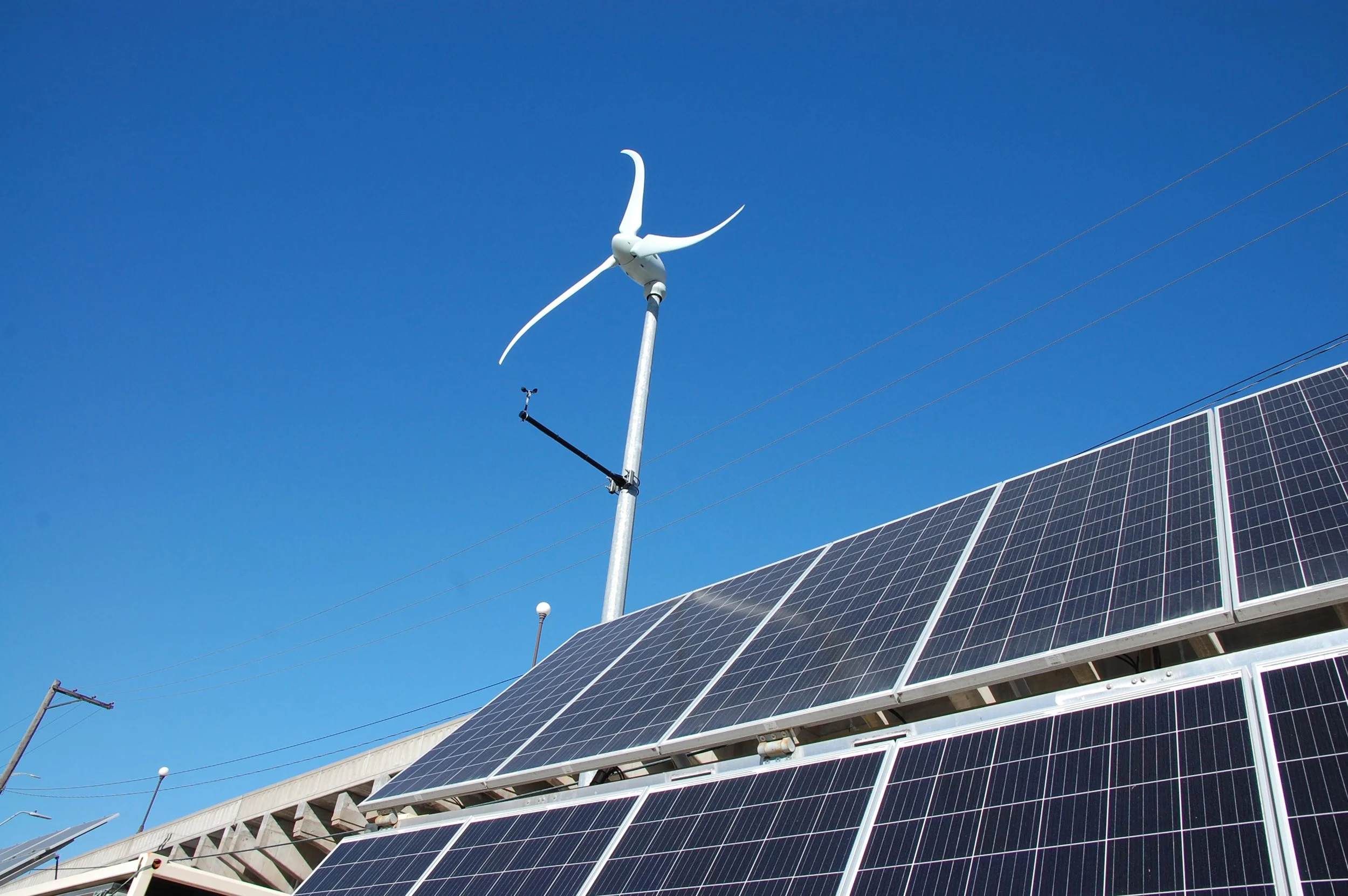
The Rise of Hybrid Renewable Microgrids
Hybrid renewable microgrids are emerging as a practical response to these challenges.
Rather than eliminating diesel generation entirely, hybrid systems reduce how often diesel assets must operate by integrating renewable generation and energy storage into the broader power architecture.
A typical hybrid microgrid may combine:
Wind generation
Solar photovoltaic systems
Battery storage
Diesel or gas backup generation
Intelligent controls and energy management systems
This diversified approach allows operators to balance generation resources dynamically based on weather conditions, load demand, and system priorities.
According to the International Renewable Energy Agency (IRENA) report on renewable mini-grids, hybrid renewable systems are increasingly viewed as an effective strategy for reducing diesel dependence while improving long-term energy affordability and resilience in remote regions.
The benefits of hybrid systems can include:
Reduced fuel consumption
Lower generator runtime
Improved operational efficiency
Reduced maintenance requirements
Better integration of distributed renewable resources
Improved resilience during supply disruptions
Reduced emissions
Importantly, hybrid systems also allow communities to transition incrementally rather than replacing infrastructure all at once.
This staged approach can reduce capital risk while enabling operators to improve efficiency over time.
The U.S. Department of Energy Office of Electricity’s microgrid program and National Renewable Energy Laboratory (NREL) microgrid research initiatives have both emphasized the growing importance of microgrids as part of broader resilience and distributed energy strategies.
“The distribution of renewable power on hybrid mini-grids represents an excellent opportunity for islands and isolated communities to displace costly diesel fuel, boost energy security, contribute to emissions reduction, and lower electricity costs.”
ADNAN Z. AMIN
International Renewable Energy Agency (IRENA)
The Role of Distributed Wind in Hybrid Systems
While solar energy receives much of the attention in renewable power discussions, distributed wind systems can provide significant value within hybrid microgrids, particularly in island and coastal environments.
Wind generation offers several advantages that complement solar production:
Overnight generation capability
Seasonal diversification
Reduced dependence on battery-only overnight storage
Strong performance in coastal and elevated terrain environments
Unlike solar-only systems, distributed wind can continue producing energy overnight, during cloudy conditions, and during seasonal low-solar periods. This complementary production profile can help stabilize hybrid systems, improve battery utilization, and reduce reliance on backup generators during periods of lower solar availability.
Modern distributed wind systems are increasingly designed for integration into AC-coupled microgrids, enabling direct interaction with local distribution infrastructure and simplifying system architecture.
In hybrid deployments, distributed wind is often used alongside solar, battery storage, and backup generation to help reduce diesel runtime while maintaining system reliability across varying environmental conditions.
Additional Skystream turbine deployments in Puerto Rico and Jamaica demonstrated the use of distributed wind systems in tropical coastal environments exposed to salt air, humidity, and severe weather conditions, including installations in San Juan, Minillas, Canóvanas, and Mammee Bay, Jamaica.
Maldives Hybrid Renewable Microgrid Deployment
CASE STUDY
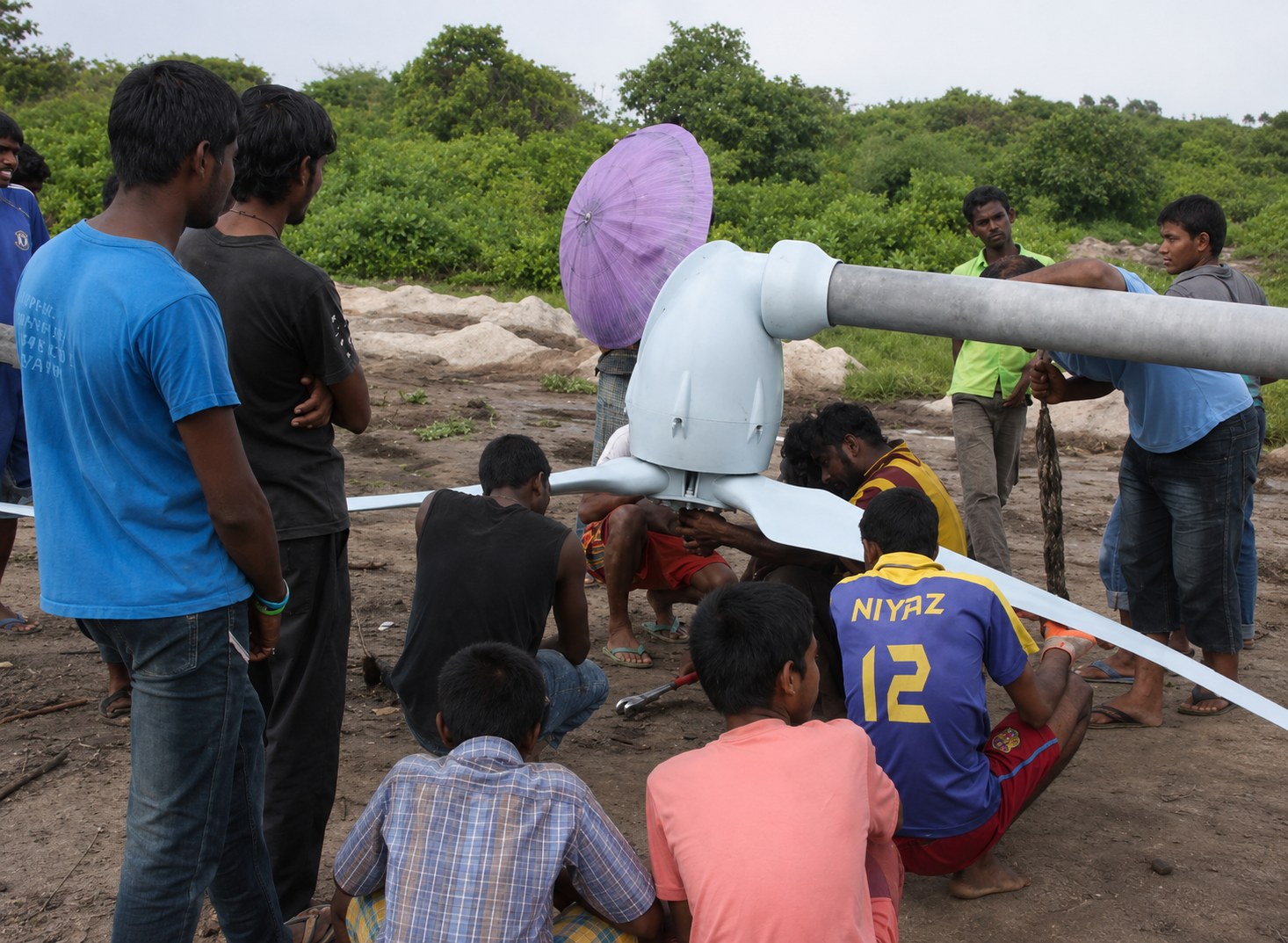
Skystream’s microgrid project in the Maldives remains a compelling example of how hybrid renewable systems can reduce fuel dependence in remote island environments.
Rural islands throughout the Maldives have historically relied on imported diesel fuel for residential electricity generation. Fuel transportation costs, generator inefficiency, and limited infrastructure created ongoing operational challenges for many communities.
To address these issues, Skystream 3.7 turbines were deployed as part of a renewable hybrid energy system across three island communities.
The deployment included:
67 Skystream wind turbines
Solar photovoltaic generation
Battery storage
Diesel backup systems
Integrated microgrid controls
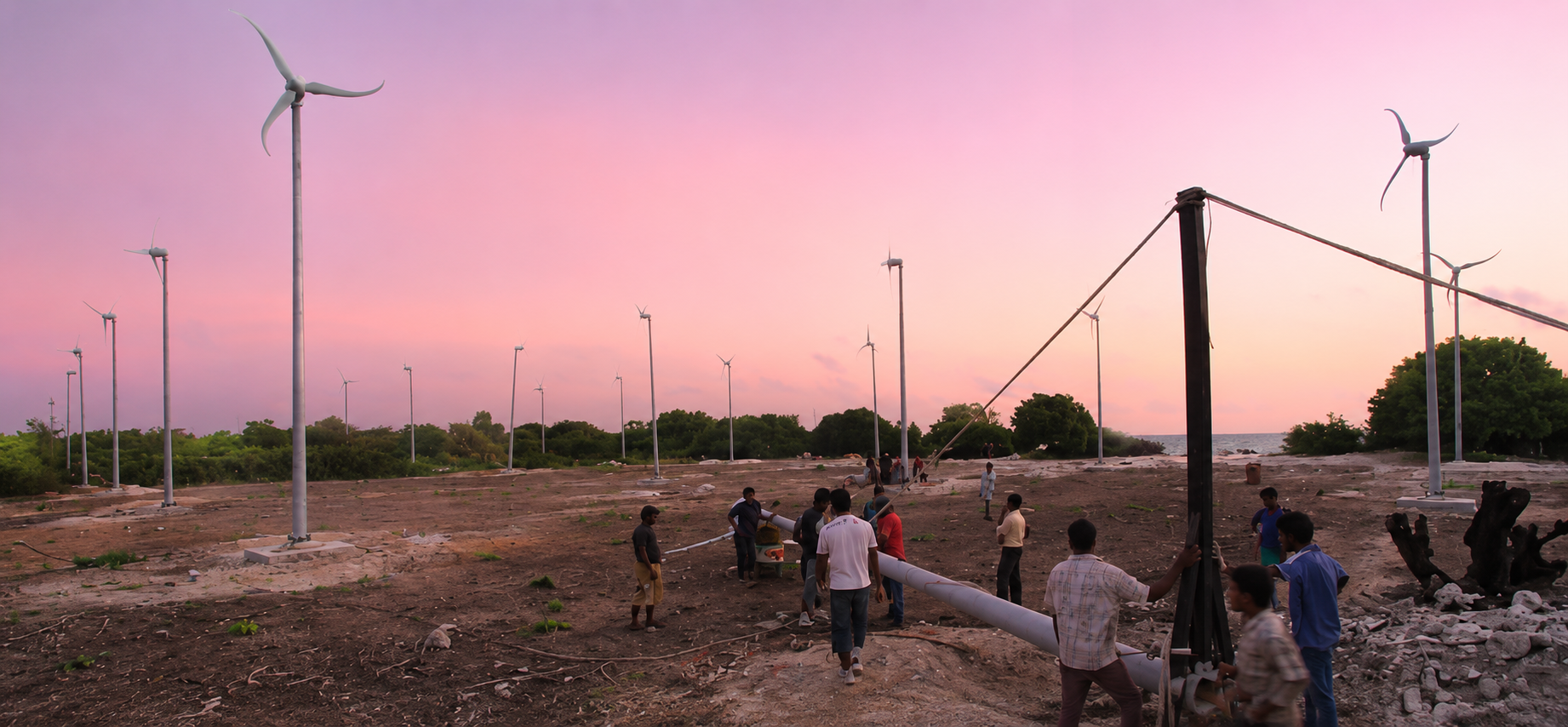
The system was designed to reduce diesel use for residential electricity generation by up to 80%.
According to project documentation, the system was expected to save approximately 120,000 liters of diesel annually while reducing carbon emissions by approximately 200 tons of CO2 per year across the three pilot islands.
One notable aspect of the deployment was its AC-coupled architecture.
Unlike traditional DC-based remote power systems, the Skystream turbines were connected directly to the island’s AC distribution infrastructure. This simplified integration and allowed renewable generation to offset diesel consumption dynamically based on available wind and solar resources.
The system also highlighted an important operational reality: the goal was not to eliminate diesel entirely.
Instead, diesel generators were retained as backup resources and utilized strategically when renewable resources alone were insufficient to sustain load demand.
This operational model reflects a broader evolution occurring within hybrid microgrid design globally, where renewable systems create value not only through energy production but also by reducing how frequently conventional generators must operate. Reduced generator runtime can help lower fuel consumption, maintenance exposure, operational costs, and logistical dependency on fuel delivery.
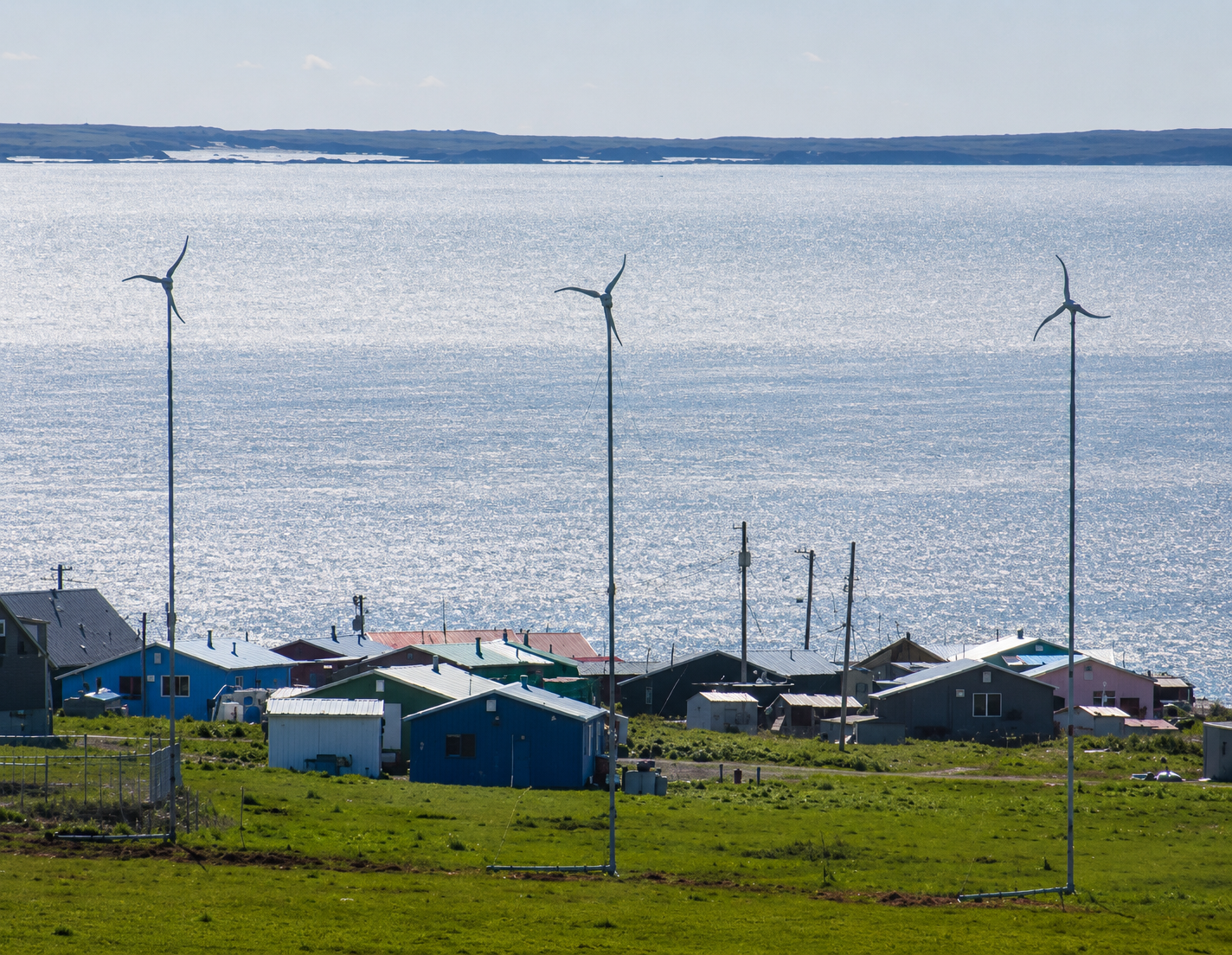
Remote Water Infrastructure in Alaska
Hybrid wind systems are also being deployed in remote northern environments where fuel transportation costs and infrastructure limitations create significant operational challenges.
In Goodnews Bay, Alaska, three Skystream 3.7 turbines were installed to support a village water treatment facility requiring approximately 18,000 kWh of electricity annually.
The system was designed to:
Offset diesel-generated electricity
Reduce operational fuel costs
Provide redundant power for critical infrastructure
Feed excess energy into the village microgrid
The turbines were projected to provide approximately 75% of the water plant’s electrical needs while reducing diesel consumption.
This project demonstrates how hybrid renewable systems can support critical public infrastructure in isolated environments while improving operational resilience and reinforces an important infrastructure trend: distributed renewable systems are being evaluated not only for sustainability goals but for their ability to reduce operational risk in difficult-to-service environments.
The turbines were projected to provide approximately 75% of the water plant’s electrical needs while reducing diesel consumption.
Educational and Community Infrastructure
Distributed wind can also play a role in institutional sustainability and operational efficiency initiatives.
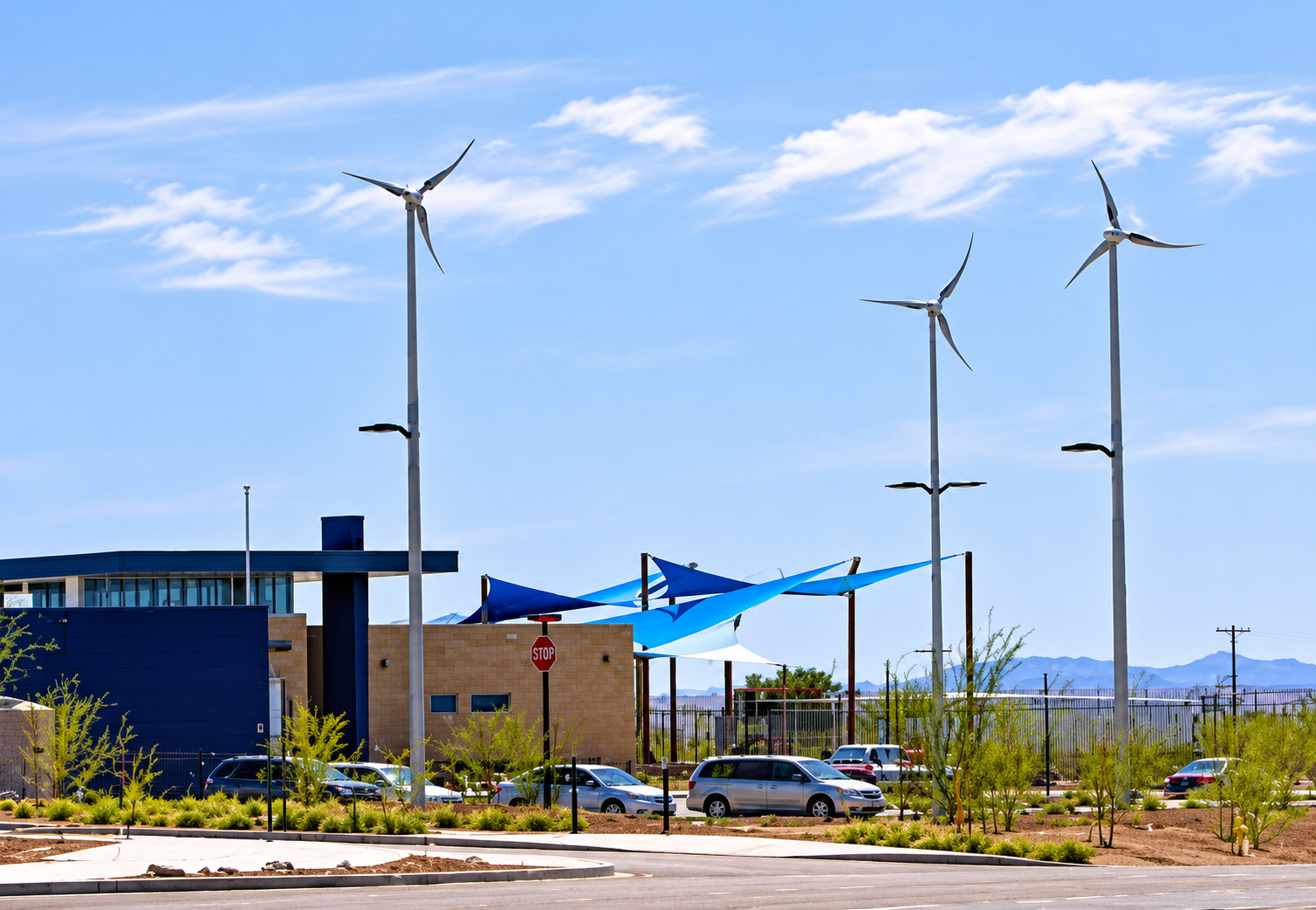
At the Vail Academy & High School in Arizona, five Skystream wind turbines were integrated alongside solar generation, rainwater harvesting, and energy-efficient building systems as part of a broader sustainability initiative.
The project contributed to reducing campus energy demand by 30% while supporting long-term operational savings goals.
While not a remote microgrid deployment, the project illustrates how distributed renewable systems can contribute to broader resilience and efficiency strategies across different infrastructure types.
Key Design Considerations for Operators
As hybrid microgrids become more common, operators are increasingly focused on system architecture, operational simplicity, and long-term maintainability. Several considerations play an important role in successful deployment planning.

Renewable Resource Diversity
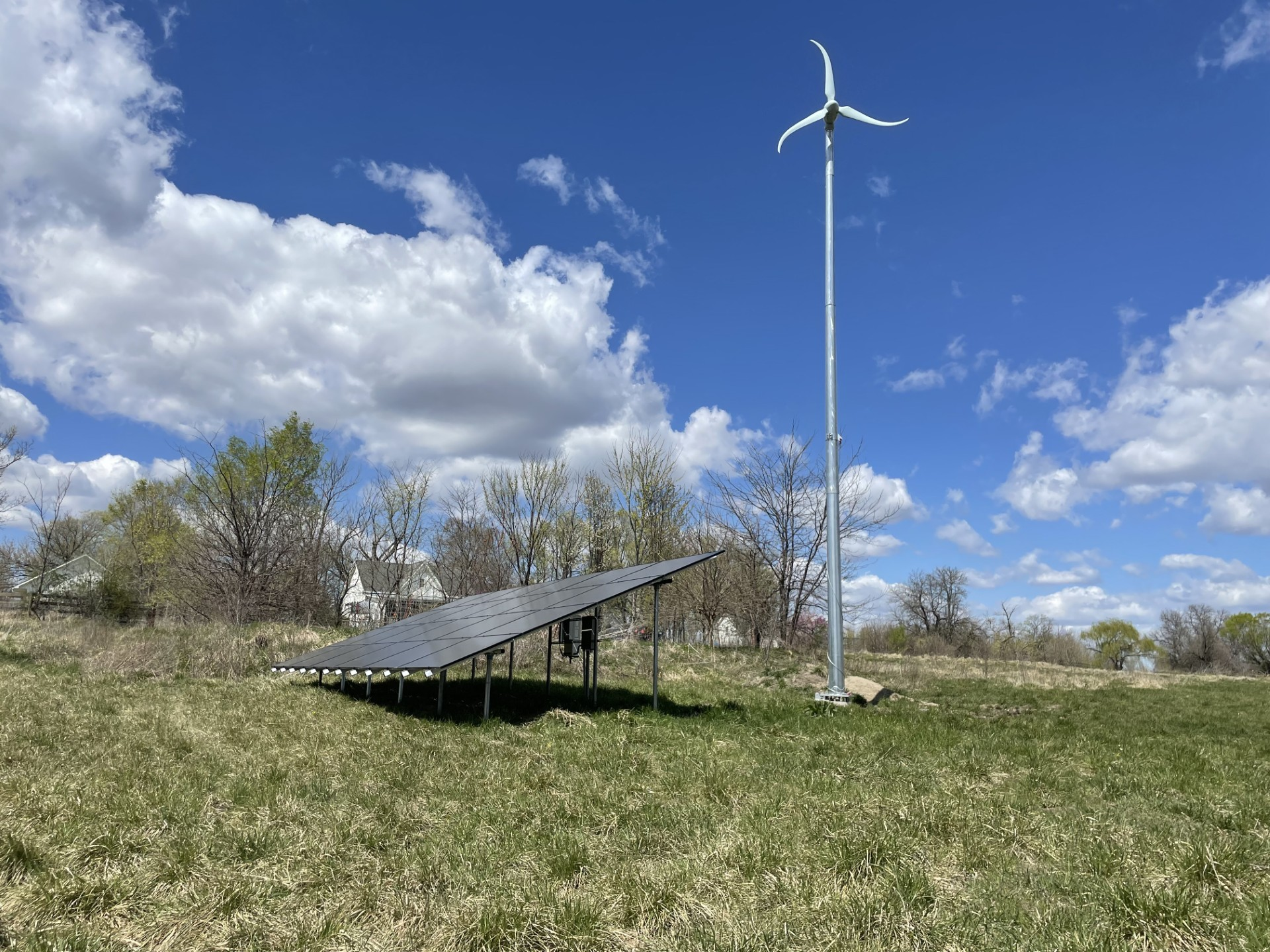
Systems that combine multiple renewable resources can often deliver more stable generation profiles across varying conditions. Wind and solar frequently complement one another seasonally and throughout daily production cycles.

Generator Runtime Optimization
In many hybrid systems, the primary operational benefit comes not from eliminating generators entirely, but from reducing runtime significantly.
Reduced runtime can lower:
– Fuel consumption
– Maintenance frequency
– Mechanical wear
– Operational interruptions
This can meaningfully improve long-term operating economics.

AC-Coupled vs. DC-Coupled Architectures
AC-coupled systems can simplify integration with existing electrical infrastructure and allow renewable generation assets to interact more directly with local distribution systems.
The Maldives deployment leveraged this type of architecture to optimize renewable contribution dynamically.

Serviceability and Local Maintenance
Remote systems must often be maintained by local operators or technicians with limited resources.
Simplified architectures, standardized components, and remote monitoring capabilities can significantly improve long-term operational reliability.

Scalability
Many communities and infrastructure operators prefer systems that can scale incrementally over time as demand grows or budgets allow.
Modular renewable deployments can help reduce upfront capital pressure while enabling phased expansion.
Future Outlook
The broader market drivers supporting hybrid renewable microgrids are expected to strengthen over the coming decade. Fuel price volatility, resilience concerns, grid modernization initiatives, and emissions reduction goals are all contributing to increased interest in distributed energy systems.
At the same time, improvements in the following areas are making hybrid systems increasingly practical across a broader range of applications:
Battery storage
Power electronics
Energy management software
Distributed controls
Renewable generation efficiency
Modern distributed wind platforms are also benefiting from improvements in corrosion resistance, inverter durability, controls optimization, and hybrid system integration. Particularly for coastal and high-humidity operating environments.
These engineering improvements help distributed wind systems better align with resilience-focused infrastructure applications where long-term operational reliability is critical.
Island nations, rural communities, utilities, and infrastructure operators are all evaluating ways to reduce dependence on fuel logistics while improving local energy resilience.
For remote environments, hybrid renewable microgrids are becoming less of a pilot concept and more of a long-term operational strategy.
Conclusion
Remote and island infrastructure operators are increasingly reevaluating how power systems are designed, particularly in environments where fuel logistics, severe weather, and grid limitations create long-term operational risk.
Hybrid renewable microgrids are emerging not simply as sustainability initiatives but as practical infrastructure strategies capable of improving energy reliability, reducing fuel dependency, and increasing operational flexibility in difficult-to-service environments.
The Maldives deployment illustrates how distributed wind generation can contribute to hybrid systems designed for real-world island conditions, where diversified energy production and reduced generator runtime can improve long-term system performance.
As distributed energy technologies continue evolving, many operators are shifting away from single-source power dependence toward more diversified, resilient energy architectures designed to better withstand operational disruption before it occurs.