
CASE STUDY
Maldives Microgrid
Location
The Maldives
Challenge
Limited access to reliable, cost-effective power
Solution
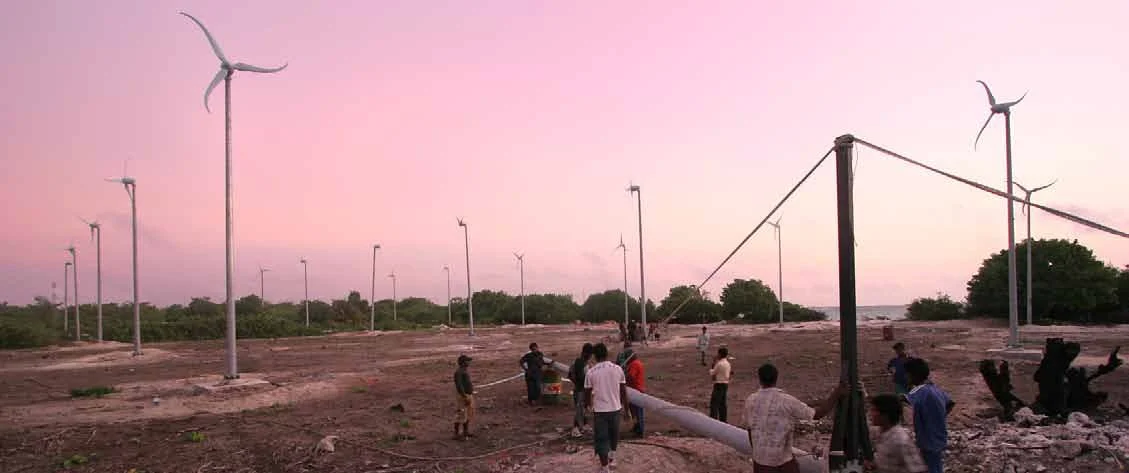
67 Skystream wind turbines
Results
Cut diesel use by up to 80%
Reduced generator runtime
~120,000 liters of fuel saved annually
Reducing Diesel Dependence with Hybrid Wind and Solar
Across remote island communities, power is not just an infrastructure challenge, it is an operational one. Fuel logistics, maintenance constraints, and cost volatility all impact how reliably electricity can be delivered.
In the Maldives, three island communities implemented a hybrid microgrid designed to reduce diesel dependency while maintaining consistent, reliable power.
The result: a system engineered to significantly cut generator runtime while integrating renewable energy into existing island grids.
The Challenge
For most remote islands in the Maldives, diesel generation has historically been the only viable source of electricity.
But diesel comes with real constraints:
High and unpredictable fuel costs due to import and transport
Generators frequently operating inefficiently, either under or over capacity
Limited local resources for maintenance and upkeep
Inability to provide consistent 24-hour power in some communities
The issue was not simply access to energy, it was the ongoing burden of running diesel-dependent systems.
The Solution
A hybrid microgrid was deployed across three island communities, integrating:
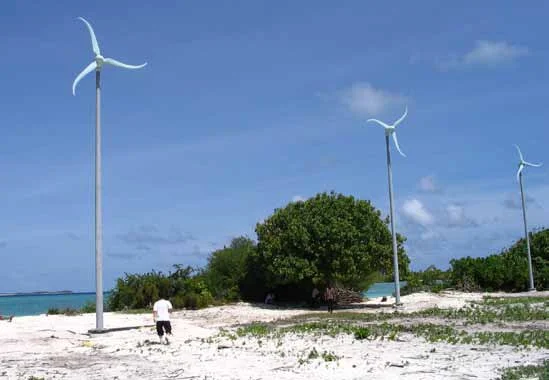
67 Skystream wind turbines
Solar photovoltaic (PV) arrays
Battery storage for buffering and stability
Diesel generators for backup
Rather than replacing diesel entirely, the system was designed to reduce how often generators need to run.
Wind and solar provide primary generation when available, with diesel acting as a secondary support layer only when needed.
This approach allows the system to adapt dynamically to real-world conditions while maintaining consistent power delivery.
“The hybrid system is expected to save approximately 120,000 liters of diesel annually across the pilot islands, with significant CO₂ reductions.”
Results That Matter
The system was designed to deliver measurable impact:
Up to 80% reduction in diesel used for residential power
Approximately 120,000 liters of diesel saved annually across the three islands
Estimated 200 tons of CO₂ emissions avoided per year
Beyond the numbers, the operational improvements are just as important:
More consistent power availability
Reduced strain on generators and maintenance teams
Lower exposure to fuel supply disruptions
Why This Approach Works
Designed for Real Operating Conditions
This microgrid uses an AC-coupled architecture that integrates directly into the existing distribution network.
No need to rebuild the grid
Compatible with existing infrastructure
Optimized for village-level demand profiles
Reduces Generator Runtime, Not Just Fuel Use
Diesel generators run less frequently, operate more efficiently, and require less maintenance.
Complements Solar, Not Competes with It
Wind generation balances solar variability, producing energy beyond daylight hours and stabilizing the system.
Deployment in Remote Environments
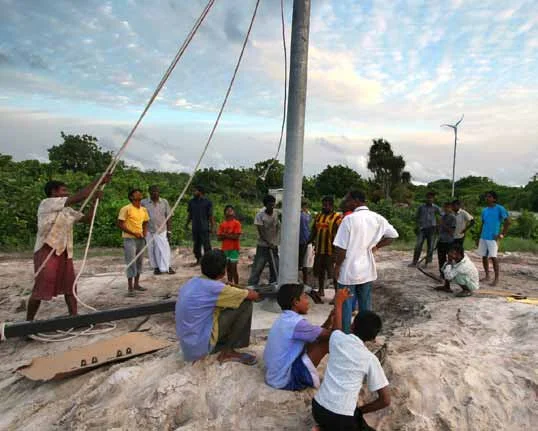
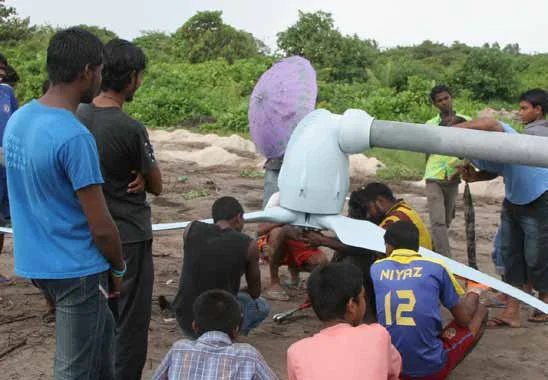
Installation was completed under real-world constraints:
Limited access to heavy equipment
Community-supported installation
Systems designed for durability in island conditions
This reinforces a critical point: solutions must be practical to deploy and maintain where they operate.
Key Takeaways
The goal is not to eliminate diesel overnight, but to reduce how often it runs
Hybrid wind and solar systems integrate into existing grids without major redesign
Small wind plays a critical role in stabilizing renewable-heavy systems
Operational simplicity is as important as generation capacity
For island communities, energy strategy is not just about sustainability. It is about reliability, cost control, and operational resilience.
This deployment demonstrates that small wind, when integrated into a hybrid system, can meaningfully shift how power is generated and managed without requiring a complete infrastructure overhaul.
This project represents an earlier Skystream deployment and remains a clear example of how hybrid microgrids can significantly reduce diesel dependence.
Explore what hybrid wind can do for your operation.
Start with a site-level assessment and real-world performance modeling.