
Skystream’s Skyview Monitoring Gives Owners Confidence and Clear Performance Insight
Wind systems do not behave like conventional generators. Their output changes with weather, seasons, and protective operating limits built into the turbine. Understanding that behavior is essential for anyone who wants to evaluate performance, respond appropriately when conditions change, and feel confident in a long-term energy investment.
For Skystream owners, that clarity comes through Skyview.
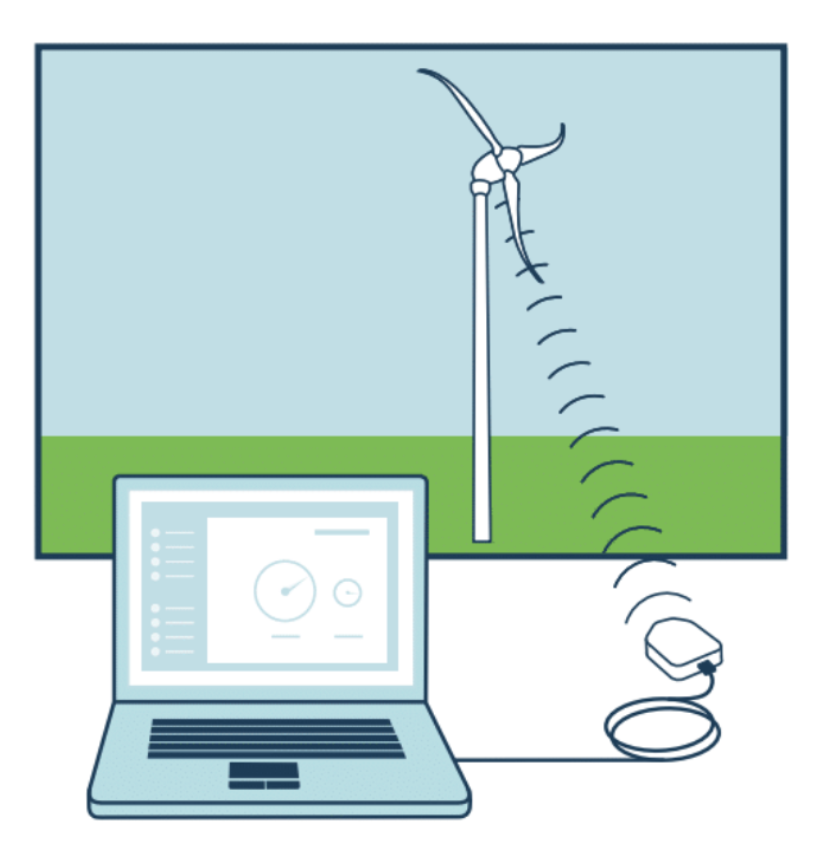
Skyview is a monitoring platform included with every Skystream turbine and is accessed on-site using a dedicated Skyview tablet. The tablet connects wirelessly to the turbine, allowing owners to view operating data and system behavior as conditions change.
Rather than relying on remote dashboards or automated alerts, Skyview is designed to support hands-on understanding by showing how the system behaves in real conditions as they occur.
1. Real-Time Insight Into Wind Energy Production
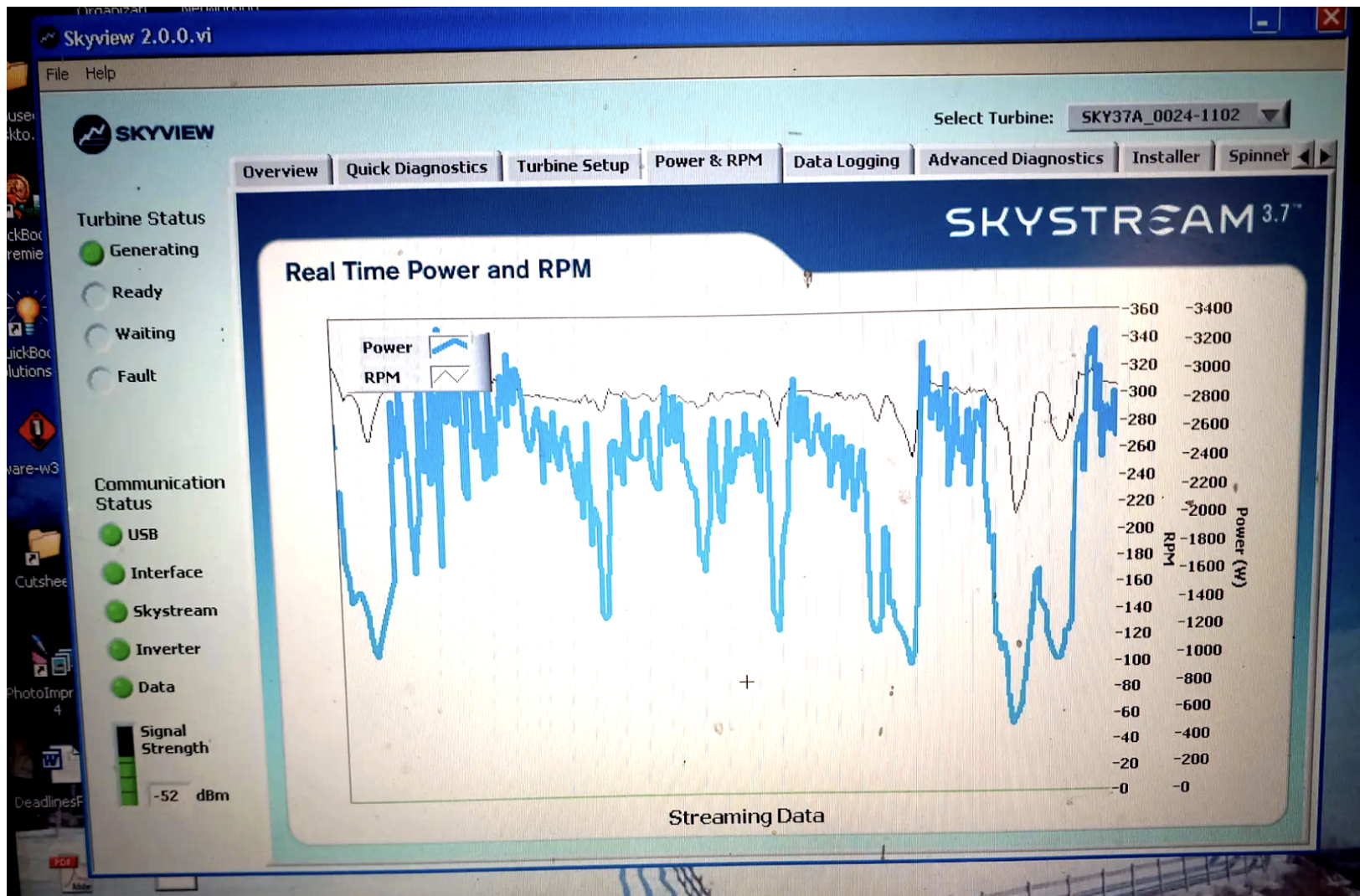
Skyview allows owners, when connected locally to their turbine, to see how much energy it is producing at any given moment alongside real-time output and operating state. This helps answer everyday questions such as:
How much energy has the turbine produced recently?
How does production change throughout the day or week?
Is my system performing as expected?
Skyview can connect with up to five Skystream turbines, allowing owners to view data from each system individually, one turbine at a time, rather than as an aggregated portfolio.
Because wind varies naturally, short-term fluctuations are normal. Seeing operating conditions helps owners understand whether changes are expected rather than assuming something is wrong.
The operator builds familiarity with how the turbine behaves in real conditions and across seasons, not just ideal ones.
2. Understanding Operating Conditions and Performance Trends
Beyond real-time output, Skyview tracks performance trends, including:
Changes in turbine output across seasons
Production patterns during varying operating conditions
Long-term energy generation trends
This historical context is especially important for rural, coastal, and island locations where wind resources can vary significantly across seasons.
Rather than reacting to isolated dips or spikes, owners can look at longer-term patterns to understand how their turbine performs over months and years. That context makes it easier to evaluate whether the system is delivering value relative to expectations.
Wind speed itself is measured using a separate anemometer when required, allowing owners to correlate environmental conditions with turbine performance, while Skyview focuses on tracking how the turbine responds across seasons.
3. Operational Alerts Help Identify When Attention is Needed
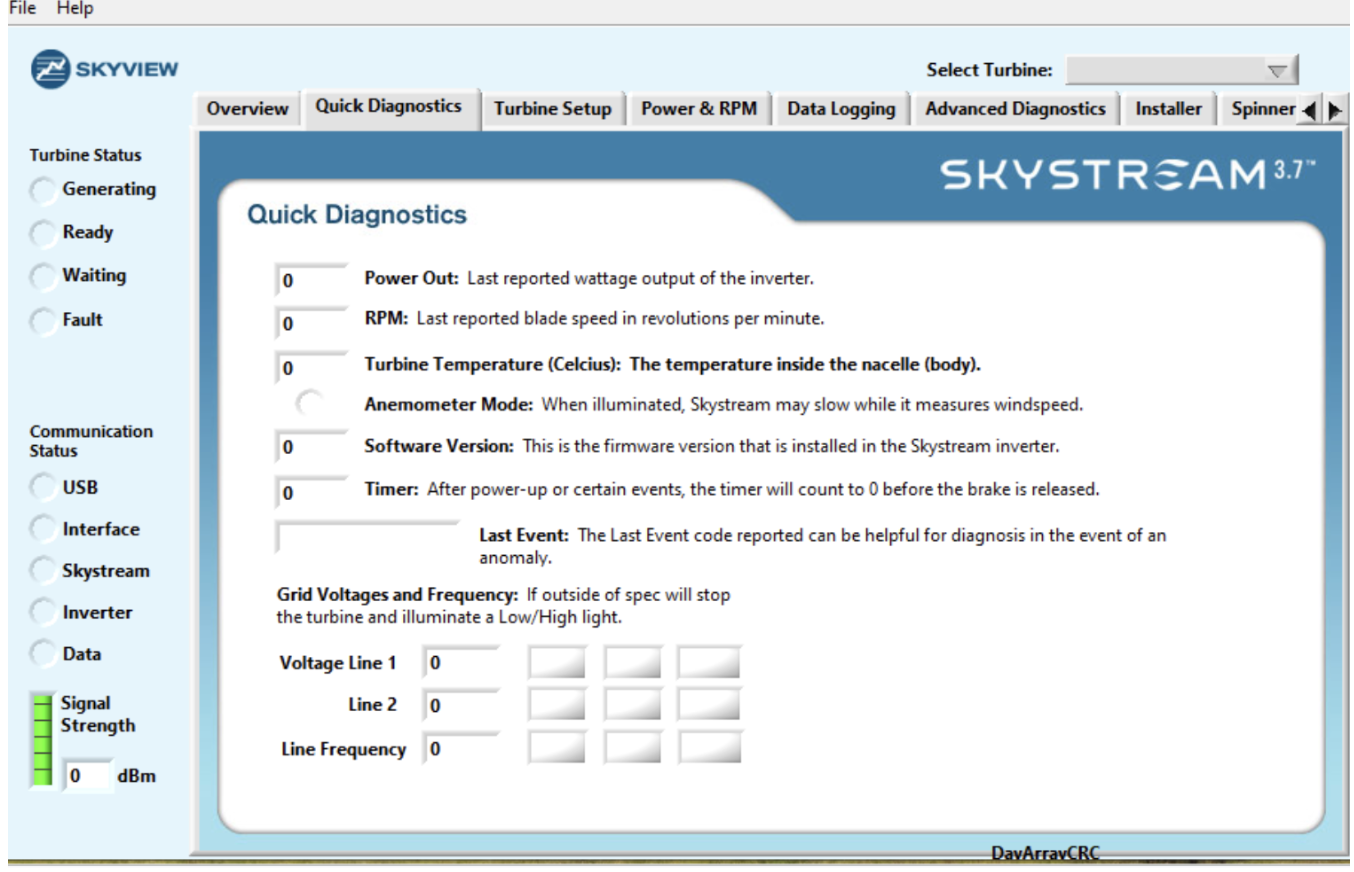
When an owner is actively viewing Skyview, the platform displays when the turbine enters specific operating states, such as high-wind shutdowns, protective limits, restarts, or other notable conditions. In many cases, these changes are expected responses to wind conditions rather than faults.
Over time, these alerts create a diagnostic baseline, making it easier to distinguish expected operating behavior from patterns that may warrant closer investigation. Because Skyview presents data on a turbine-by-turbine basis rather than as aggregated totals, individual operating patterns remain clear and are not masked by averages.
For example, a turbine may temporarily shut down during a strong storm to protect itself, then automatically return to operation once conditions normalize. Seeing that context helps owners avoid unnecessary concern when production pauses for normal, protective reasons.
At the same time, Skyview makes it easier to recognize when attention is actually needed. If a turbine shows repeated restarts or inconsistent operation during moderate wind conditions, that pattern stands out against normal behavior. Having that visibility allows owners to share specific information with their service provider, leading to more efficient troubleshooting and better-planned service when intervention is warranted.
4. Data That Helps Owners Evaluate Long-Term Value
For most owners, confidence grows as performance history builds. Seeing how the turbine operates across different seasons, weather events, and operating conditions helps answer important long-term questions:
How does production vary year to year?
How does output change across seasons?
Is the turbine contributing meaningfully to energy goals?
This insight allows owners to evaluate the cost and benefit of their system using real operating data rather than assumptions.
With consistent performance history, owners gain a clearer foundation for future energy decisions. That may include adding storage, integrating other energy sources, or expanding wind capacity with additional turbines. Just as importantly, it can confirm when the existing system is already well sized for the need.
By tracking energy production consistently, Skyview allows owners to quantify how much the turbine is contributing to their energy goals and to make informed decisions with confidence, based on real-world performance rather than isolated moments.
See Your Wind Resource in Action
Understanding turbine behavior starts with understanding the wind itself. A wind study helps set realistic expectations before installation and provides a baseline for evaluating long-term performance.
If you are considering a Skystream system for your home, property, or project, request a wind study to better understand your wind resource, or explore Skyview’s Program Requirements to learn more.