
Local Power, Local Control: Why More Property Owners Are Generating Energy On-Site
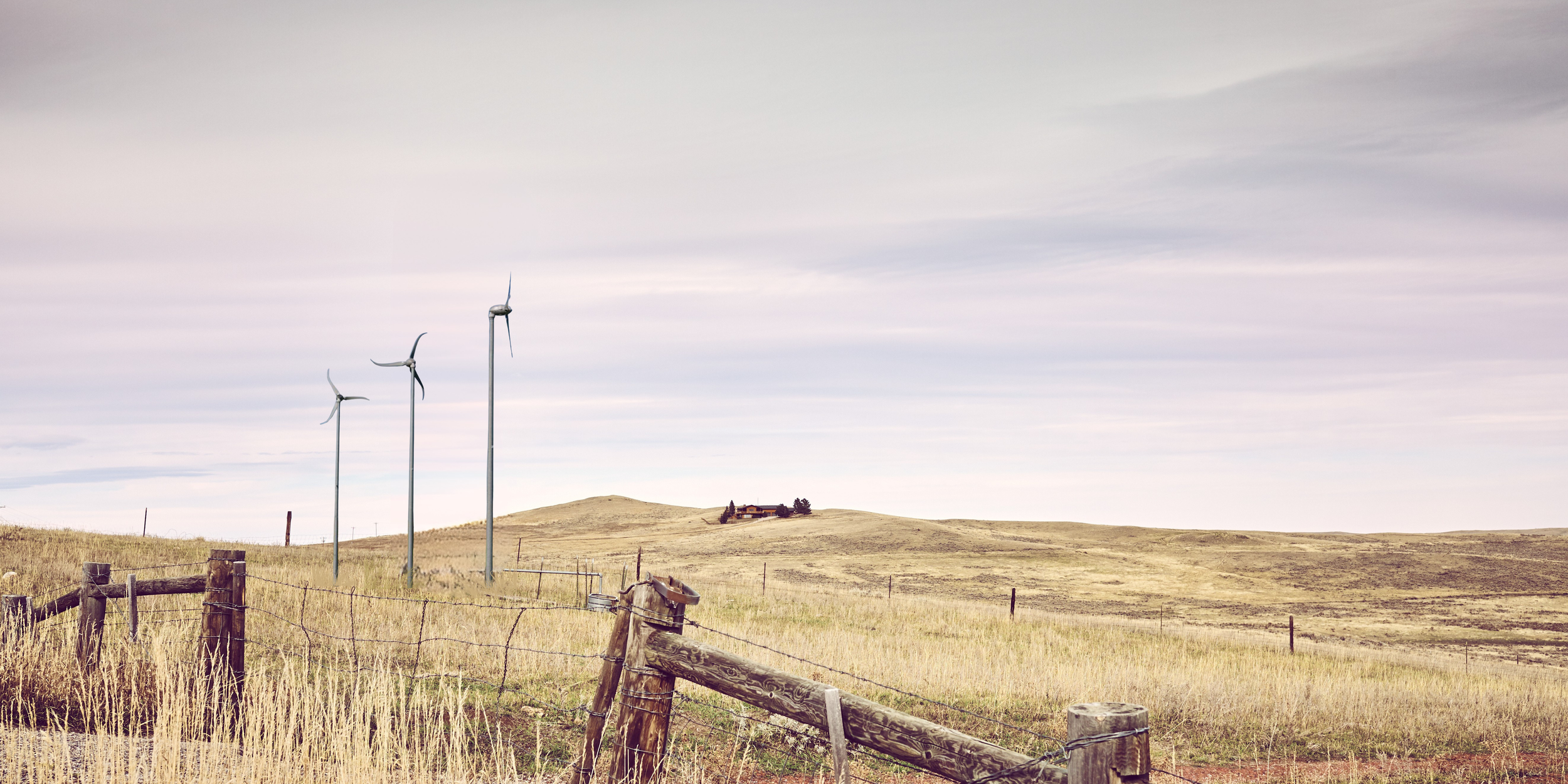
From farms and ranches to island communities, energy independence is becoming a practical business decision rather than a fringe pursuit.
For decades, most property owners have relied almost entirely on centralized power. Electricity came from somewhere else, and fuel arrived from somewhere else. When outages, shortages, or price spikes hit, there wasn't much anyone could do about it at the local level.
That's changing.
Electricity prices are climbing in many regions, battery storage has gotten cheaper and more reliable, renewable technologies have matured, and severe weather keeps testing the limits of aging infrastructure. In 2024, the average U.S. customer lost about 11 hours of power, nearly double the prior decade's average, with 80% of that driven by major events like Hurricanes Beryl, Helene, and Milton. Together, these trends are pushing property owners, whether it's a ranch in Montana, a farm in the Midwest, a coastal residence, or an island community running on imported diesel, to look at generating at least some of their own power.
The goal usually isn't to leave the grid entirely. It's to gain more say over how energy is produced, used, and managed on-site.
The Real Cost of Depending on Someone Else’s Grid
For rural and remote properties, energy costs go well beyond the monthly utility bill. Owners are also contending with:
Generator fuel expenses
Fuel transportation logistics and challenges
Power quality problems
Outage risks during storms
Rising demand from pumps, irrigation systems, communications equipment, and now electric vehicles
Island and remote communities feel this most acutely. Places that depend on shipped-in diesel are exposed to fuel price swings, transportation costs, and the ever-present risk of a disrupted supply chain. Beaver Island, a Lake Michigan community of about 600 year-round residents, gets its power from the mainland through underwater cables. When a severe ice storm hit the region, the island lost power for weeks. The problem was never really about generating electricity; it’s about making sure power is there when it’s needed, regardless of what is happening with fuel deliveries or transmission lines hundreds of miles away.
Producing Power Closer to Where It’s Used
Distributed energy systems flip the traditional model: instead of relying entirely on centralized generation, power is produced closer to where it’s consumed. For farms, ranches, and residences, that typically means a mix of small wind turbines, solar arrays, battery storage, and backup generators working together as a hybrid system.
None of these technologies are meant to carry the full load on their own. The point is that each resource chips in when conditions allow, which cuts into how much generators need to run and how much fuel gets burned. Even modest renewable generation can noticeably reduce generator runtime, fuel use, and maintenance costs over time.
Where Small Wind Fits
Solar tends to get most of the attention in distributed energy conversations, but wind fills a gap that solar can’t. In many agricultural, coastal, and island settings, wind resources are often strongest when solar output is weakest: overnight, through winter months, and during storms. That complementary pattern helps balance energy production across the year rather than leave gaps when the sun isn’t out.
For properties with reasonably consistent wind, distributed wind turbines can become a steady, low-maintenance contributor to the overall energy mix.
Real-World Applications
Community-scale projects illustrate the same principles on a larger scale.
Three island communities in the Maldives built hybrid microgrids combining wind turbines, solar panels, batteries, and diesel generators, deploying 67 Skystream small wind turbines as part of the system. The project was designed to reduce diesel consumption for residential electricity by up to 80 percent, with projected savings of approximately 120,000 liters of diesel each year.
Similar hybrid approaches have also been adopted much closer to home. Across rural Alaska, remote communities have spent years integrating wind with existing diesel generation to reduce fuel consumption and improve reliability, where every gallon of diesel must be delivered over long distances. One example is Perryville, where 10 Skystream 3.7 wind turbines were connected to the community's diesel-powered microgrid, allowing wind to offset diesel use while backup generators continued to provide power when needed.
Most farms and residences operate at a fraction of that scale, but the underlying principle remains the same. Generating more power locally means depending less on fuel that has to be shipped, trucked, or piped in from somewhere else. It doesn’t eliminate the utility bill, but it gives property owners more flexibility in how they produce, manage, and purchase energy.
The Flexibility Argument for Local Power
The most underrated benefit of on-site generation may simply be optionality. It gives property owners the ability to:
Buy less electricity from the grid
Reduce generator runtime
Keep critical equipment running during an outage
Charge batteries when conditions are favorable
Support electric vehicle (EV) charging
A single small wind turbine won't cover every kilowatt-hour a property uses. But it changes how often backup systems have to kick in and how much fuel needs to be purchased over a season.
On a ranch running a water-pumping system, a farm with irrigation equipment, or a coastal property with backup power needs, every kilowatt-hour produced on-site is one the owner doesn't have to buy from a utility or generate by burning diesel.
Over time, those savings compound while easing wear and tear on backup equipment.
Independence, Not Just Economics
For a lot of owners, this isn't purely a cost conversation. Farmers and ranchers have long placed a premium on self-reliance. Remote homeowners often chose their location specifically for the freedom it offers. Island communities know better than most what it means to depend on fuel deliveries and infrastructure hundreds of miles away.
Distributed energy fits naturally into that mindset: more visibility into how energy is produced and used, more control over operating costs, and more confidence that critical systems will keep running when conditions are difficult.
Why On-Site Generation Is Gaining Momentum
In 2016, solar generated about 1% of U.S. electricity, according to the U.S. Energy Information Administration (EIA). By 2025, solar had become the nation's largest source of new generating capacity, accounting for 54% of all new capacity added to the grid. At the same time, battery storage has improved, small wind technology has continued to mature, and hybrid energy systems have made it easier to combine multiple energy sources into a single, reliable solution.
For many property owners, the question is no longer whether to generate some of their own power, but which combination of technologies makes the most sense. Centralized power will continue to play an important role, but more farms, businesses, homeowners, and even island communities are deciding that generating at least a portion of their own electricity is a worthwhile investment.
Ready to Explore Local Power?
Distributed wind performs best where local wind resources support it, so evaluating conditions on-site is the natural first step before considering an installation. From there, the right fit depends on what you're solving for: lower energy costs, less generator runtime, better resilience during outages, or simply more control over where your power comes from.
Skystream Energy's Skystream 3.7 Pro is built for exactly this kind of hybrid application to help property owners, agricultural operations, remote facilities, and island communities generate reliable power on-site.
Since every property has different demands and wind resources, a site assessment is the best way to determine whether distributed wind belongs in your energy strategy.
Contact Skystream Energy to find out what that could look like for your site.