
Hurricane Season Is Coming: Preparing Backup Power Systems Before the Next Storm
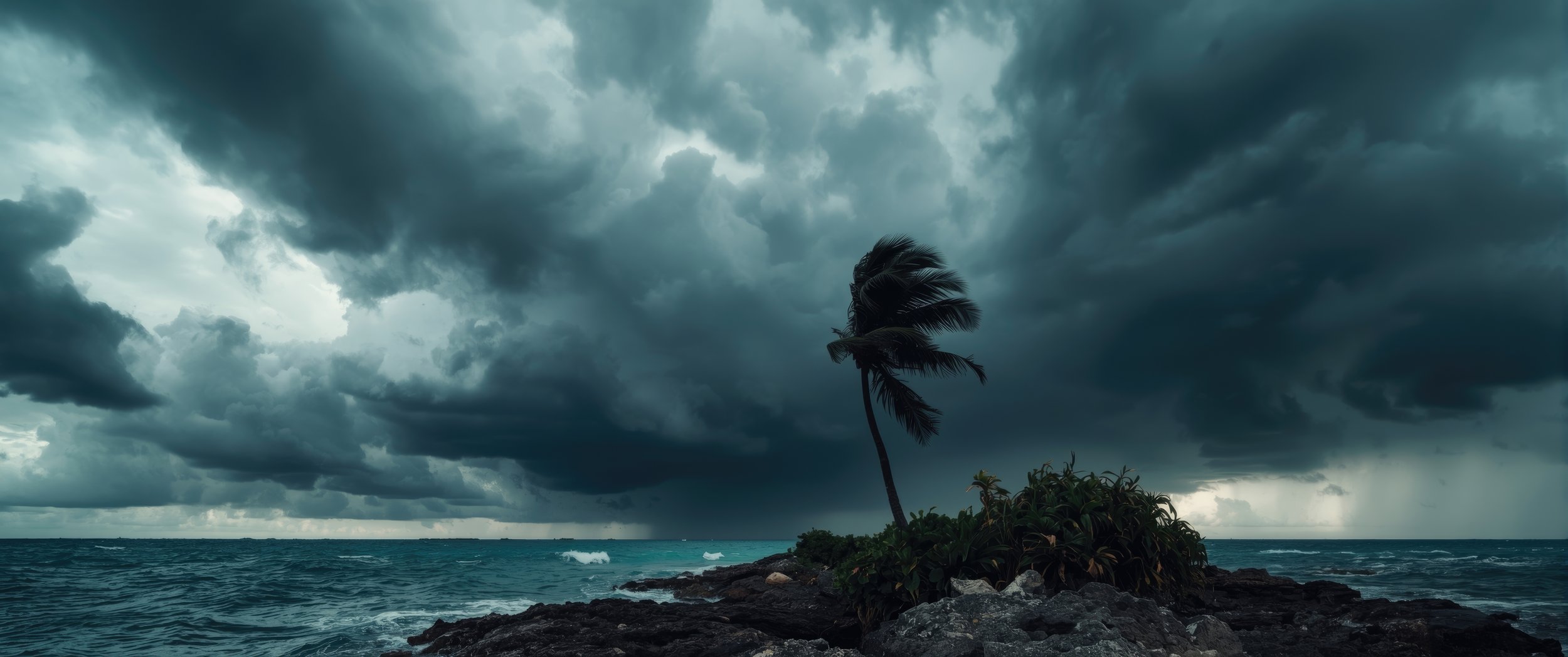
As hurricane season approaches, utilities, telecom operators, resorts, and remote infrastructure owners across storm-prone regions are once again asking the same question:
How do you maintain critical power when the grid goes down for days or even weeks?
Long after hurricane-force winds pass, the operational problems usually remain.
Communications infrastructure can stay offline, fuel deliveries may be delayed, and backup systems designed for short outages are often pushed far beyond their intended runtime.
In many coastal and island regions, the answer has traditionally been diesel generators. But after repeated hurricane seasons, operators are confronting the limitations of diesel-only backup systems: fuel logistics, maintenance demands, runtime constraints, and vulnerability during extended outages.
That is driving growing interest in hybrid power systems that combine renewable energy, battery storage, and backup generation to improve resilience before the next storm arrives.
For small wind systems, however, one question immediately follows: Can a wind turbine actually survive a hurricane?
The answer depends heavily on how the system is engineered.
Designing for Hurricane-Prone Environments
In regions vulnerable to tropical storms and hurricanes, survivability is not optional. Energy infrastructure must be designed around extreme weather realities, including sustained high winds, flying debris, flooding, and prolonged utility outages.
Modern small wind systems intended for these environments are engineered differently than conventional utility-scale wind farms.
For example, the Skystream 3.7 Pro platform is designed for distributed and critical infrastructure applications rather than large-scale centralized generation. The system can support remote communications sites, substations, relay buildings, resorts, off-grid facilities, and other critical loads where operational continuity matters most.
One of the most important design features in hurricane-prone regions is the hydraulic tilt-down tower system. Rather than leaving the turbine fully exposed during an extreme weather event, operators can lower and secure the structure close to the ground ahead of a major storm.
This directly addresses one of the primary concerns infrastructure operators have in hurricane zones: preventing equipment damage and reducing exposure during Category 4 or Category 5 storms.
For particularly severe coastal environments, tower structures and installation designs can also be customized around local wind-loading requirements and site conditions.
Survivability, however, is only part of the equation. Infrastructure systems also need to return to operation quickly after a storm passes.
That is where distributed hybrid systems become increasingly important.
Why Hybrid Power Matters After a Hurricane
The reality is that no single technology solves resiliency challenges on its own.
Solar production drops during storm conditions and overnight. Diesel generators require fuel delivery and maintenance. Batteries eventually need recharging.
Hybrid systems work because they combine complementary technologies.
In many hurricane-prone regions, operators are beginning to evaluate how small wind can complement existing solar and battery systems to extend runtime, reduce diesel dependency, and maintain critical operations longer during outages.
This is particularly relevant for:
Communications towers
Remote substations
Relay buildings
Emergency operations infrastructure
Coastal resorts and hospitality properties
Island microgrids
Remote water treatment systems
During discussions with infrastructure stakeholders in Jamaica, operators described how hurricanes exposed vulnerabilities in communications towers and relay station backup systems after major storms disrupted grid operations.
Those challenges are not unique to the Caribbean.
Across storm-prone regions, backup systems are increasingly being evaluated not only on whether they can produce power, but whether they can remain operational and recover quickly after severe weather events.
Reducing Generator Runtime Before and After Storms
One of the biggest misconceptions about hybrid renewable systems is that they are intended to completely replace generators.
In many real-world deployments, the more practical objective is reducing how often generators need to run.
That matters because generator runtime directly affects the following:
Fuel consumption
Maintenance intervals
Operating costs
Service life
Fuel delivery risk during emergencies
Small wind can play an important role in hybrid systems because wind resources often remain available before and after storm systems move through coastal regions.
When paired with solar and battery storage, distributed wind generation can help maintain battery charge levels and offset diesel runtime during extended outages.
In the Maldives, 67 Skystream turbines were deployed as part of hybrid microgrid systems designed to help reduce diesel consumption across remote island communities.
The project highlighted how distributed wind can complement solar, storage, and backup generation in fuel-constrained environments.
The broader lesson is important: resilience is rarely about eliminating backup generation entirely. It is about using every available energy source more strategically.
Small Wind Is Not Utility Wind
Distributed small wind systems are fundamentally different from large utility-scale wind farms.
Large utility turbines are designed for centralized grid production. Small wind systems like the Skystream 3.7 Pro are designed for localized resilience and operational continuity.
That distinction matters in hurricane-prone regions because the applications are different.
Rather than powering entire communities, these systems are often intended to support:
Auxiliary substation loads
Communications infrastructure
Critical control systems
Emergency backup power
Remote facilities with limited fuel access
That targeted approach makes distributed wind more practical for infrastructure operators evaluating resilience investments.
Why Planning Needs to Start Before Hurricane Season
The worst time to evaluate a backup power strategy is after a major storm is already forming.
By then, equipment lead times tighten, contractors become overloaded, fuel demand spikes, and infrastructure vulnerabilities are exposed in real time.
Early summer is often the best window for operators to evaluate generator runtime exposure, fuel logistics risks, communications resilience, hybrid power opportunities, and broader renewable integration strategies before severe weather disruptions begin.
For many organizations, the future of hurricane resilience will not rely on a single power source. It will rely on layered systems that combine solar, battery storage, generators, and distributed wind to improve operational continuity under extreme conditions.
As storm intensity and grid pressure continue to increase globally, resilient infrastructure design is becoming less about sustainability messaging and more about operational preparedness.
The goal is not replacing existing backup systems.
It is building infrastructure that can operate longer, recover faster, and rely less on a single point of failure when conditions become unpredictable.
For operators evaluating storm resilience strategies ahead of hurricane season, Skystream can help assess where distributed wind may fit within a broader hybrid power approach. Contact us to learn more about the Skystream 3.7 Pro and distributed wind solutions designed for remote and storm-prone environments.