
Why More Co-ops Are Looking to Small Wind for Local Resilience
Rural electric cooperatives and municipal utilities have always played a unique role in American energy. Built on the principle of local service, they have delivered affordable, reliable power to regions often overlooked by large investor-owned utilities.
Today, that mission is being tested like never before. From the rise of electric vehicles and data centers to extreme weather and rising grid congestion, the demands on co-op systems are increasing. To strengthen resilience and stabilize rates, co-op leaders are turning to distributed energy resources (DERs) that diversify generation and keep power local.
One resource that deserves renewed attention is small wind, modern wind turbine generators that deliver reliable, community-scale power alongside solar, storage, and distributed technologies.
The Case for Distributed Energy
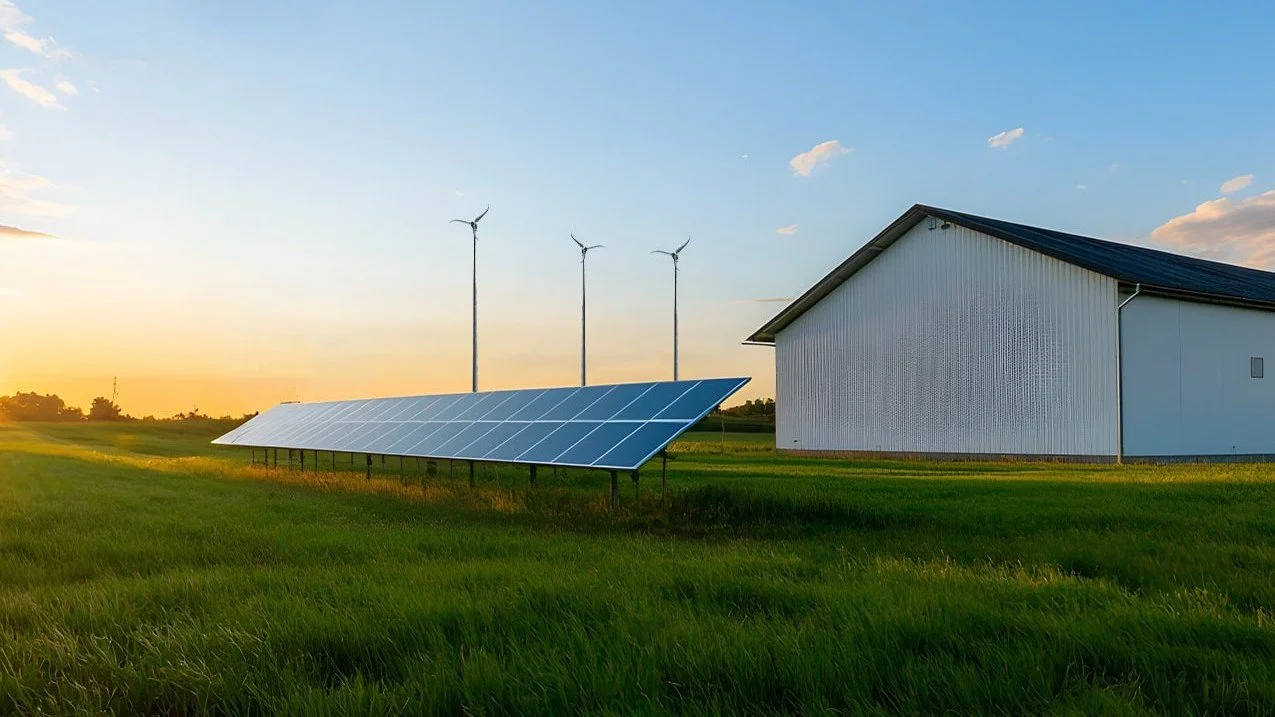
Distributed energy is not about ideology; it is about practical economics and reliability. For utilities and co-ops, DERs help:
Balance loads by generating power closer to where it is used
Reduce stress on transmission infrastructure, lowering line losses and deferring costly upgrades
Strengthen outage resilience, keeping critical services running when the central grid fails
For co-ops, that reliability translates directly into member trust and satisfaction. It is the ultimate measure of success in a member-owned utility.
And while solar has led much of this development, it does not tell the full story. Solar power peaks during the day, but member demand often peaks in the evening. That is where small wind comes in.
Why Small Wind Belongs in the Mix
Unlike massive wind farms, small wind power generators are designed for distributed sites, mounted on 35- to 70-foot towers and sized for farms, facilities, or microgrids. They provide distinct advantages:
Complements solar for 24-hour coverage. Wind often peaks at night or in off-season months, delivering power when solar drops off.
Improves resilience for critical loads. Keeps facilities like water systems, shelters, and communications towers online during outages.
Reduces peak demand and fuel exposure. Generates locally during high-cost periods, lowering wholesale power purchases.
Builds community trust. Visible, member-owned renewable projects strengthen local pride and demonstrate stewardship.
According to the DOE’s Small Wind Guidebook, small turbines perform best as part of hybrid systems, which is exactly where many co-ops are headed.
Each kilowatt generated locally helps reduce wholesale power costs and ease rate pressures for members. The result is steadier rates and stronger local economies which are key goals for every co-op board.
The New Skystream Energy Advantage
Under new ownership, Skystream Energy has been completely redesigned for today’s distributed and hybrid energy landscape.
Earlier generations of wind generators faced reliability concerns, but those lessons shaped the redesign of the Skystream 3.7 Pro. The new system was built with stronger components, modern software, and dealer-backed maintenance to ensure lasting performance in the field.
Key improvements include:
Redesigned for reliability with stronger components, improved coatings, and a robust warranty
Twenty-five percent higher energy output from optimized control algorithms and precision balancing
Seamless integration with solar arrays, battery systems, and microgrid controllers
Local dealer support for installation, monitoring, and maintenance
Flexible deployment from single-turbine projects to distributed microgrids
Each turbine generates 5–11 MWh per year at a levelized cost of energy as low as $0.12–$0.17 per kWh, offering co-ops a competitive, community-scale renewable option.
Real-World Impact
Imagine a rural cooperative pairing a cluster of Skystream 3.7 Pro wind generators with solar and storage to power a water treatment plant or community center.
The system:
Reduces generator runtime and fuel costs
Provides nighttime renewable generation when solar is not available
Delivers predictable energy costs, shielding members from market volatility
Enhances member satisfaction by keeping power and dollars local
Projects like these also provide visible proof of a co-op’s investment in its community. When members can see renewable energy working in their own towns, it builds confidence in local leadership and pride in the system they own together.
Across the country, co-ops are already piloting microgrid projects with distributed assets. Adding small wind strengthens these initiatives by diversifying renewable generation and providing around-the-clock coverage.
And with growing state and federal support for distributed energy, co-ops have more pathways than ever to make these projects a reality.
A Path Forward for Co-ops
Distributed energy is not a one-size-fits-all solution, and no single technology can meet every need. However, small wind deserves a place at the table alongside solar, storage, and demand-side management.
For co-ops and municipal utilities, it offers a resilient, affordable, and community-aligned way to strengthen local control and demonstrate renewable leadership.
The New Skystream 3.7 Pro makes it simple to get started, with full-service site assessments, microgrid integration, and long-term dealer support included.
Ready to explore distributed wind for your service area?
Schedule a Microgrid Consultation with Skystream Energy's General Manager, Ryan Loiacono