
Goodnews Bay Water Treatment Microgrid
CASE STUDY
Location
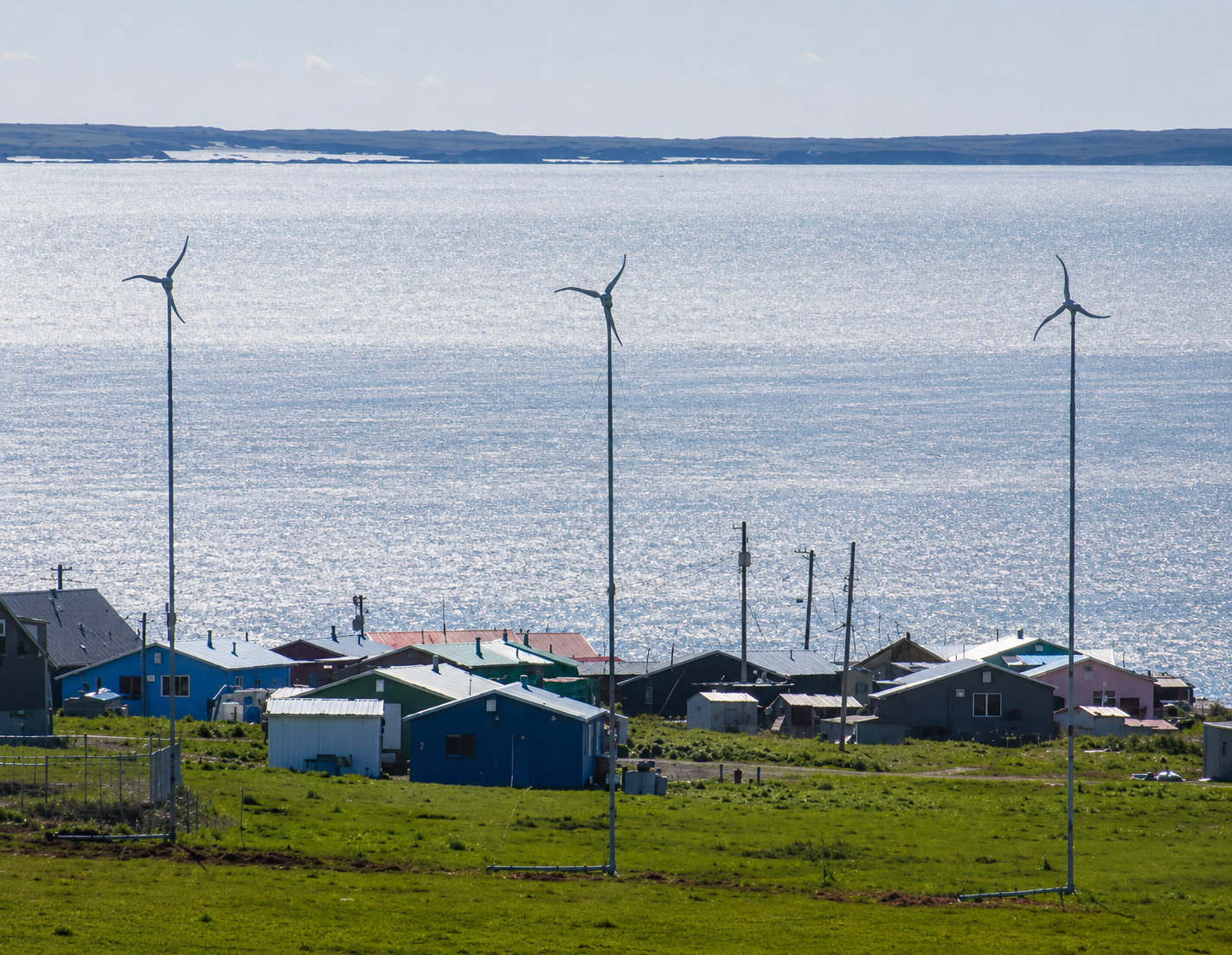
Goodnews Bay, Alaska
Application
Water Treatment Facility / Community Microgrid
Solution
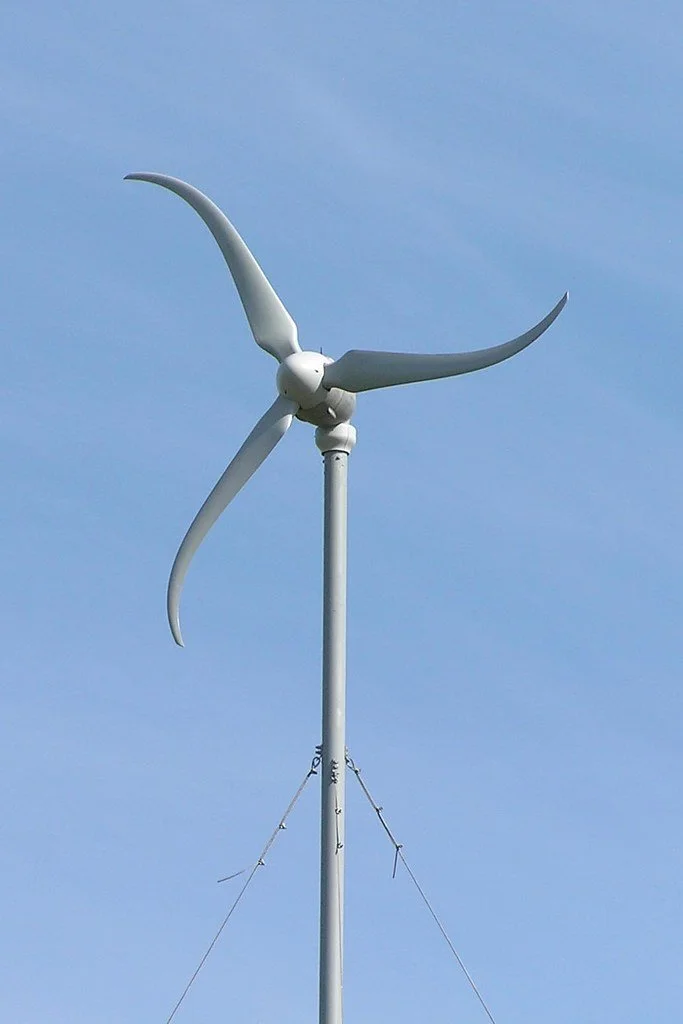
3 Skystream 3.7 wind turbines integrated with the existing diesel-powered microgrid
Results
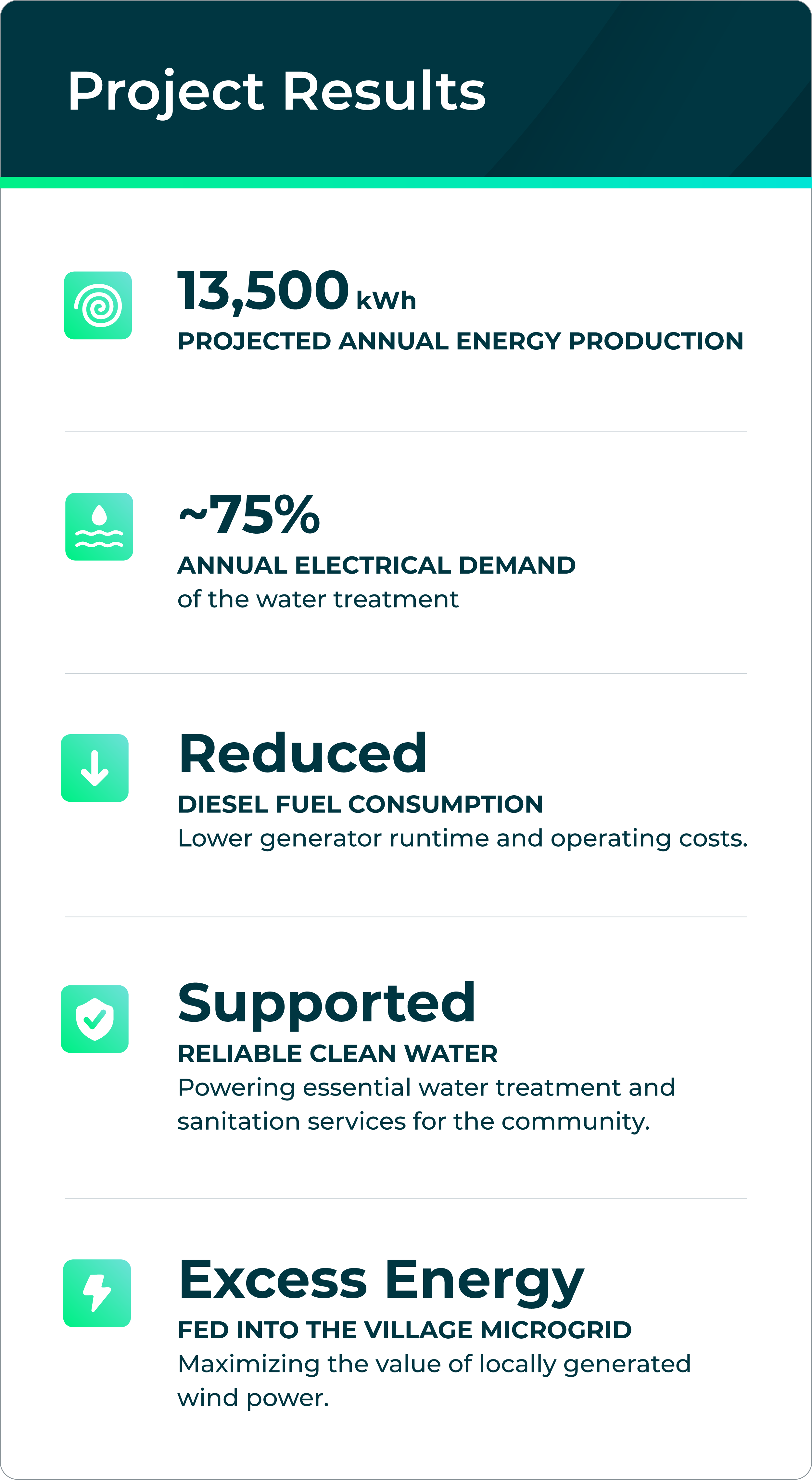
Supplied approximately 75% of the facility's annual electricity demand
13,500 kWh projected annual energy production
Supported reliable clean water and sanitation services
Enabled excess energy to be fed into the village microgrid
Distributed Wind Supports Clean Water Infrastructure in Remote Alaska
In remote communities, reliable electricity is essential for delivering safe drinking water and maintaining critical public infrastructure.
In Goodnews Bay, Alaska, three Skystream 3.7 wind turbines were integrated into the community's existing diesel-powered microgrid to help offset energy use at the village's water treatment facility. By harnessing local wind resources, the project reduced diesel consumption while supporting one of the community's most essential public services.
The Challenge
Providing safe water in remote Alaska required more than reliable infrastructure. It also required reliable power.
Located along Alaska's southwestern coast, the village of Goodnews Bay is home to approximately 250 residents who depend on continuous operation of the community's water treatment facility. Like many remote Alaska communities, the village relied on diesel-generated electricity, requiring fuel to be transported long distances at significant cost.
The challenge was to reduce diesel fuel consumption and operating costs without compromising the dependable power needed to deliver safe drinking water. The solution also needed to integrate with the village's existing microgrid, support critical infrastructure, and operate reliably in a remote community where fuel deliveries and maintenance resources were limited.
The Solution
Working with the Alaska Native Tribal Health Consortium (ANTHC) and local project partners, the community integrated three Skystream 3.7 wind turbines into the village's existing microgrid.
Installed on 70-foot guyed towers, the turbines provided grid-quality AC power to the water treatment facility without requiring external inverters or controllers. Electricity generated by the turbines helped offset the facility’s electrical demand, while excess generation was fed into the village microgrid during periods of strong wind.
Rather than replacing the village’s diesel generation, the Skystream wind turbines were integrated alongside it. This allowed the community to take advantage of locally generated wind energy while maintaining diesel generation when wind production was insufficient.
The turbines were selected for the project based on their proven performance in remote environments and challenging conditions.
“The wind turbines take advantage of an available natural resource and will be used to offset electrical power demands for the water system and ultimately make sanitation and improved health more sustainable for the community.”
John Warren
P.E., Engineering Service Director, Alaska Native Tribal Health Consortium
Results
The project was expected to generate approximately 13,500 kWh of electricity annually, supplying roughly 75% of the water treatment facility's annual electrical demand.
Supporting Community Health and Sustainability
For remote communities, reliable power supports more than electrical infrastructure. It helps sustain essential community services.
By offsetting diesel-generated electricity used by the water treatment facility, the Goodnews Bay project helped lower operating costs while supporting reliable water treatment and sanitation services. During periods of strong wind, excess electricity generated by the turbines was fed into the village microgrid, maximizing the value of locally produced renewable energy.
The project demonstrated how distributed wind could be integrated into an existing diesel-powered microgrid to strengthen critical infrastructure while reducing dependence on imported diesel fuel.
Why It Matters
Remote communities around the world continue to face many of the same challenges Goodnews Bay sought to address:
High fuel transportation costs
Dependence on imported diesel
Aging energy infrastructure
The need to support essential public services
Projects like Goodnews Bay demonstrate how distributed wind can be integrated into existing microgrids to improve efficiency, reduce fuel consumption, and support critical community infrastructure.
This project represents an earlier Skystream deployment and remains a compelling example of how distributed wind can support essential community infrastructure while reducing diesel consumption in remote communities.
Explore what hybrid wind can do for your operation.
Start with a site-level assessment and real-world performance modeling.